Concrete cracks: repair, or replace?
Which cracks are cosmetic, which ones mean the slab is done, and how to tell the difference before you pay to have anything poured.
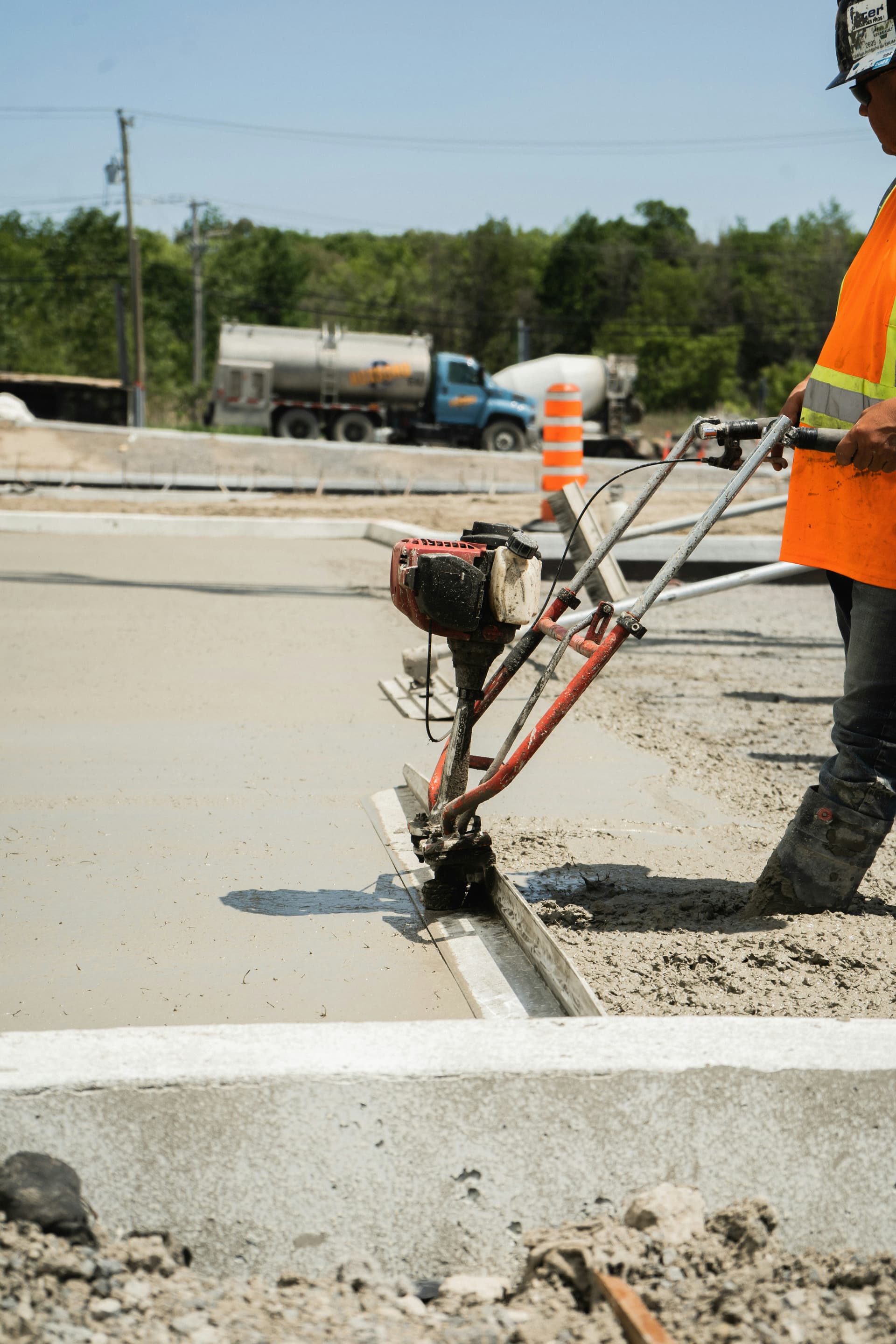
Every slab cracks somewhere
Concrete shrinks as it cures, so it cracks. That is not a defect, it is the material. Control joints are cut at set spacing to decide where those cracks go, which is why a clean line running along a joint is the system working rather than failing.
What matters is which cracks you have.
Cracks that can be repaired
These are surface problems, and the slab underneath is still doing its job:
- Hairline and medium cracks that have not moved out of plane
- Spalling and flaking on the top surface
- Blown-out edges and corners
- A slab that has settled evenly and can be lifted back to level
Cracks get cleaned out and filled with a flexible sealant, patches get a bonding agent so new concrete sticks to old, and a sunken slab can often be raised for a fraction of a replacement. Resurfacing covers the rest.
Cracks that mean replacement
Break it out and start again when:
- The two sides of a crack sit at different heights, which means the ground under one side has moved
- The slab is heaved, rocking or broken into pieces
- Cracking runs in a map pattern across the whole surface
- The base under it has washed out or failed
Patching a slab whose base has gone is money spent twice. The patch cracks again in the same place, usually within a season.
How we decide
We come out and look before quoting anything, and we will tell you plainly which of the two you have. If it can be fixed, we fix it — concrete repair is most of what we do in winter. If it is past that, we say so rather than selling you a patch that will not hold.
Get a price for your project
We measure at your address and leave a written price, usually within 48 hours of your call.